
Thinking Partner
Use conversation and reflection to uncover what you already know, develop stronger questions, and move ideas forward.
Explore the framework LaserSlothMedia
Books · frameworks · learning experiences
Not every idea arrives fully formed. Sometimes we need a conversation to find the missing pieces, examine what we believe, and see what an idea might become.
Why this matters
We read, watch, listen, and move from one source to the next. Information does not automatically become learning. Learning grows when we slow down, engage with ideas, question them, and reflect on what they mean.
A meaningful conversation, whether with a person, a book, a lecture, or an AI thinking partner, helps turn information into understanding and understanding into something we truly own.
Three ways to explore
Use conversation and reflection to uncover what you already know, develop stronger questions, and move ideas forward.
Explore the frameworkExplore practical publications for educators, leaders, and lifelong learners who want to think more deeply and act with intention.
View booksExperience interactive sessions where ideas become conversations and conversations become meaningful learning.
Invite Paul to speakThe flagship framework
A thinking partner does more than generate answers. It asks questions, makes thinking visible, challenges assumptions, supports reflection, and helps an unfinished idea become clearer.
The Thinking Partner Framework creates a conversational, responsive experience built around your thoughts, experiences, and goals.
Explore Thinking Partner
You do not need more prompts.
You need a better conversation.Conversation · reflection · stronger questions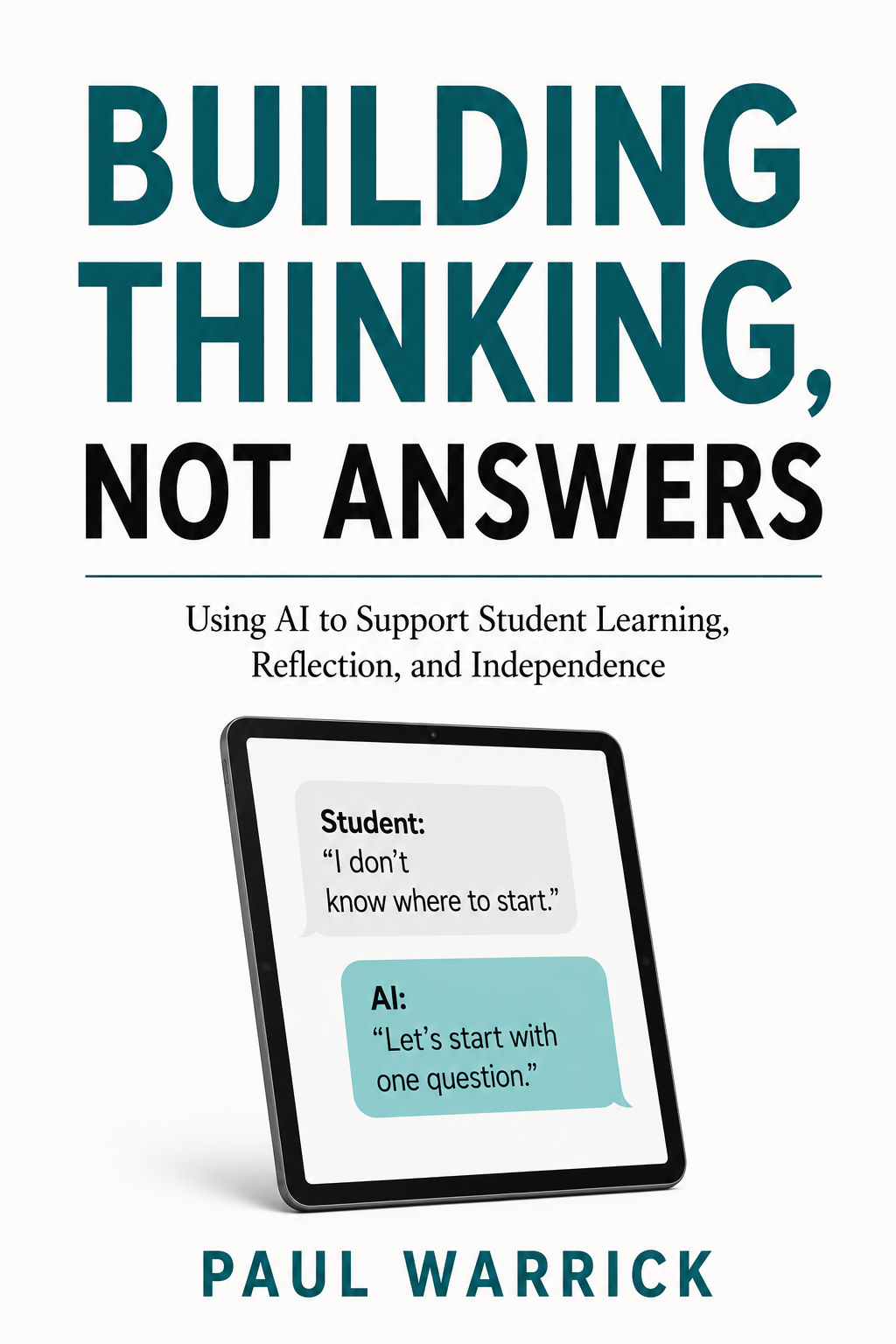
Featured publication
Using AI to Support Student Learning, Reflection, and Independence
Most discussions about AI in education focus on what the technology produces. This book asks a different question: How might AI help students develop their own thinking?
Paul offers practical approaches for using conversation, reflection, and purposeful questioning to strengthen student ownership, independence, and understanding.
Educator resources
Practical classroom resources are being prepared to extend the ideas from the book and the Thinking Partner Framework.
A clear entry point for better student conversations.
Questions that make learning and progress visible.
A practical structure for turning ideas into feasible plans.
Resource updates
Workshops & speaking
Paul Warrick delivers interactive workshops and presentations for educators, leaders, and organizations exploring AI, learning, reflection, student ownership, and the power of better questions.
Each session moves beyond information to create an experience participants use immediately.
WA-ACTE Summer Conference
A practical look at conversational AI experiences that strengthen student voice, reflection, ownership, and independent thinking.
View conference resources →02A guided process for developing a useful AI assistant through context, conversation, preferences, and continued refinement.
View conference resources →03A hands-on photography session using a simple phone attachment to explore light, image formation, creativity, and accessible classroom experimentation.
View conference resources →WA-ACTE Summer Conference
Practical workflows for translating learning materials and creating multilingual voiceovers with accessible AI tools.
Approaches for using AI to support flexible instruction, learner access, emotional awareness, and meaningful reflection.
Classroom strategies that use AI to expand student agency, personalize learning, and help learners make their thinking visible.

Paul Warrick
Educator · author · speakerAbout Paul
Paul Warrick is an educator, learning and development leader, author, and speaker who believes people often know more than they realize.
His work helps people make their thinking visible, examine ideas through conversation and reflection, and turn those ideas into meaningful action. The Thinking Partner Framework and Building Thinking, Not Answers grew from years of teaching, leadership, experimentation, and thousands of conversations about how people learn.
Connect with PaulA place to begin
Begin with a question. Continue with a conversation. Make time to reflect. Then see what your thinking becomes.